
 June 30, 2025
Last updated on May 1st, 2026
June 30, 2025
Last updated on May 1st, 2026
The best of Porto in 7 stops: History, hills, and heavenly views
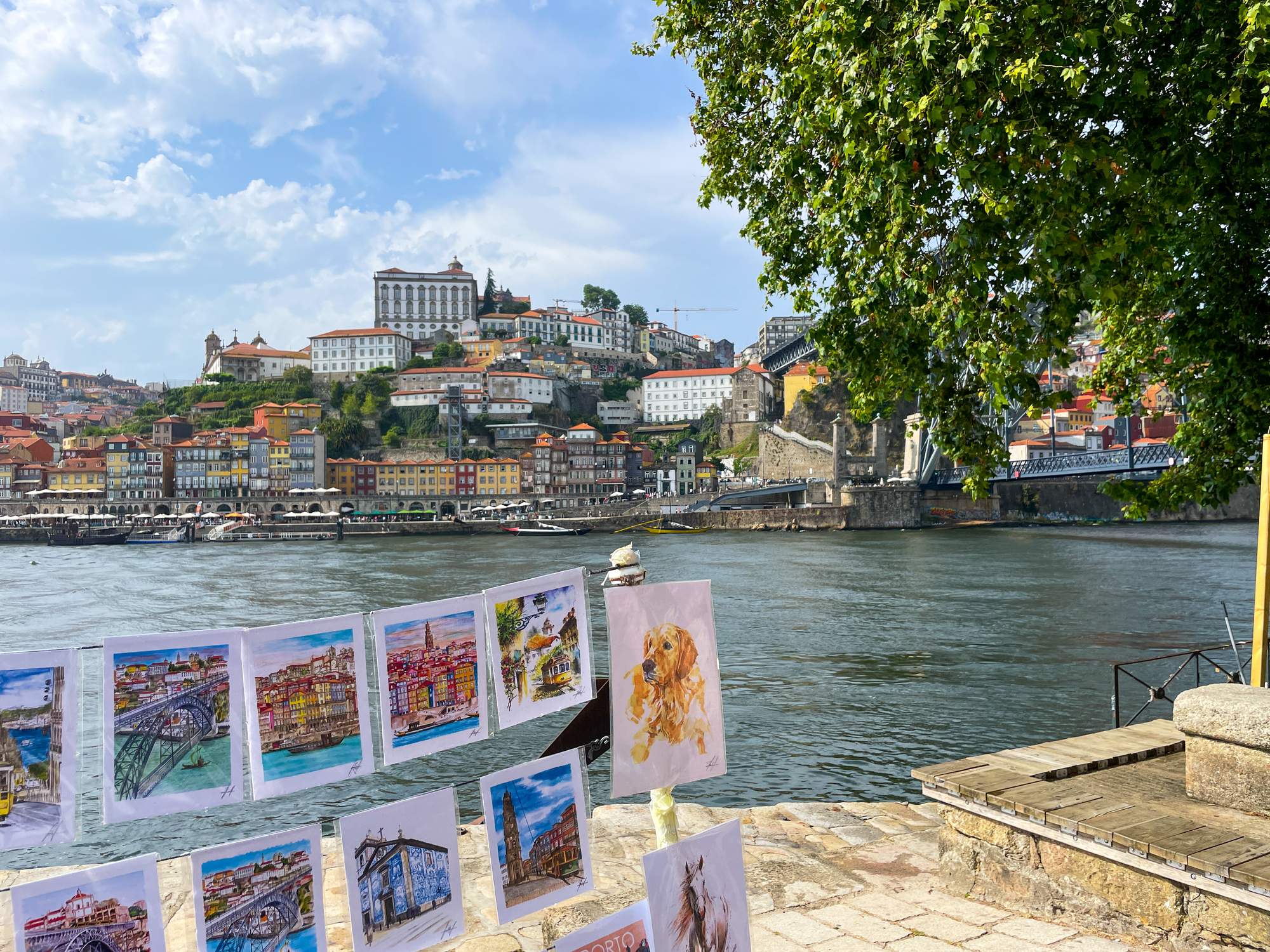
Wedged between the Atlantic and the vine-stitched slopes of the Douro Valley, this northern belle is the proud namesake of the entire country; a legacy rooted in its Roman-era name, Portus Cale, which centuries later evolved into Portugal. Today, the UNESCO-listed old town still flaunts that heritage in a maze of granite lanes, baroque bell towers, and azulejo-tiled facades that cost nothing to admire. From the moment I arrived at Campahnã station after a three-hour bus journey from Lisbon, the city embraced me with warm weather and soft breezes. Porto is compact enough to explore entirely on foot, though your legs may disagree after a day navigating its uneven pavements, so bring shoes you trust. Of course, when the climbs get too steep, there’s always a funicular or tram to sweep you away. Whether you’re sipping a morning coffee by the water in Ribeira with Portuenses (as Porto’s proud locals are known), clinking glasses of tawny port in Vila Nova de Gaia, or simply basking in a sunset from one of the city’s many miradouros, Porto delivers beauty by the barrel, often quite literally. Here are seven fantastic things to do in Porto, Portugal.
1. Tile-hunting across the city
Azulejos are hand-painted ceramic tiles (the name stems from the Arabic al zulayj, “small polished stone”) that were introduced to the Iberian Peninsula by the Moors, then embraced in earnest after King Manuel I visited Seville in 1503 and returned home smitten with the craft. Over the centuries, the Portuguese stripped the tiles of Islamic geometry, splashed them with color (often blues and whites), and used entire façades as storybooks. In Porto, azulejos line churches, train stations, and even fast food joints, and four of my favorite canvases are at São Bento Train Station, Igreja do Carmo, Capela das Armas, and the Joana Vasconcelos tile panel on Praça Guilherme Gomes Fernandes.
You don’t even need to board a train to witness one of the most breathtaking works of art in Portugal. Step into São Bento station and you’re met by 20,000 tiles wrapping around the grand hall. This Beaux-Arts masterpiece opened in 1916, and it’s a history lesson in cobalt and cream. It is named after a Benedictine monastery that once stood there in the 16th century. Painted over eleven years by artist Jorge Colaço, the azulejos there narrate the milestones of Portuguese history: royal weddings, medieval battles, country life, and Henry the Navigator’s conquest of Ceuta. Pause for at least 15 minutes to admire the scenes. If you’re traveling onwards, this is also where you can catch a train to Braga or the Douro Valley.

2. Browsing pretty bookstores (not the one you’re thinking of)
Every Porto visitor has Livraria Lello inked into their diary, but the city rewards bibliophiles who roam a little further afield. Let’s start with why this bookshop is so famous and what all the fuss is about. Livraria Lello is housed in a two-level 1906 Art-Nouveau, neo-Gothic building with carved cedar, stained-glass skylights, and a swooping crimson staircase that is said to have flickered through Harry Potter writer J. K. Rowling’s imagination when she lived in Porto in the early Nineties. It is undeniably beautiful, but the experience of visiting it is anything but straightforward.
Due to immense popularity, you can’t simply pop in and have a browse. You have to buy a timed ticket online in advance (livrarialello.pt or Get Your Guide), which doubles as credit toward any book. Even if you turn up before your slot (have your QR code ready), you’ll probably still wait in line, particularly in the afternoon (check out the lines in the video at the beginning of this article). Once inside, the experience is an elbow-to-elbow rush of Harry Potter fans, people taking selfies, and browsing through suspiciously high-priced copies of tourist-friendly books like The Little Prince and some Shakespeare titles. It is still recommended to visit Livraria Lello just for the aesthetics, but you might be in a hurry to slip out before the next wave of wizards arrives.


3. Wining and dining alfresco
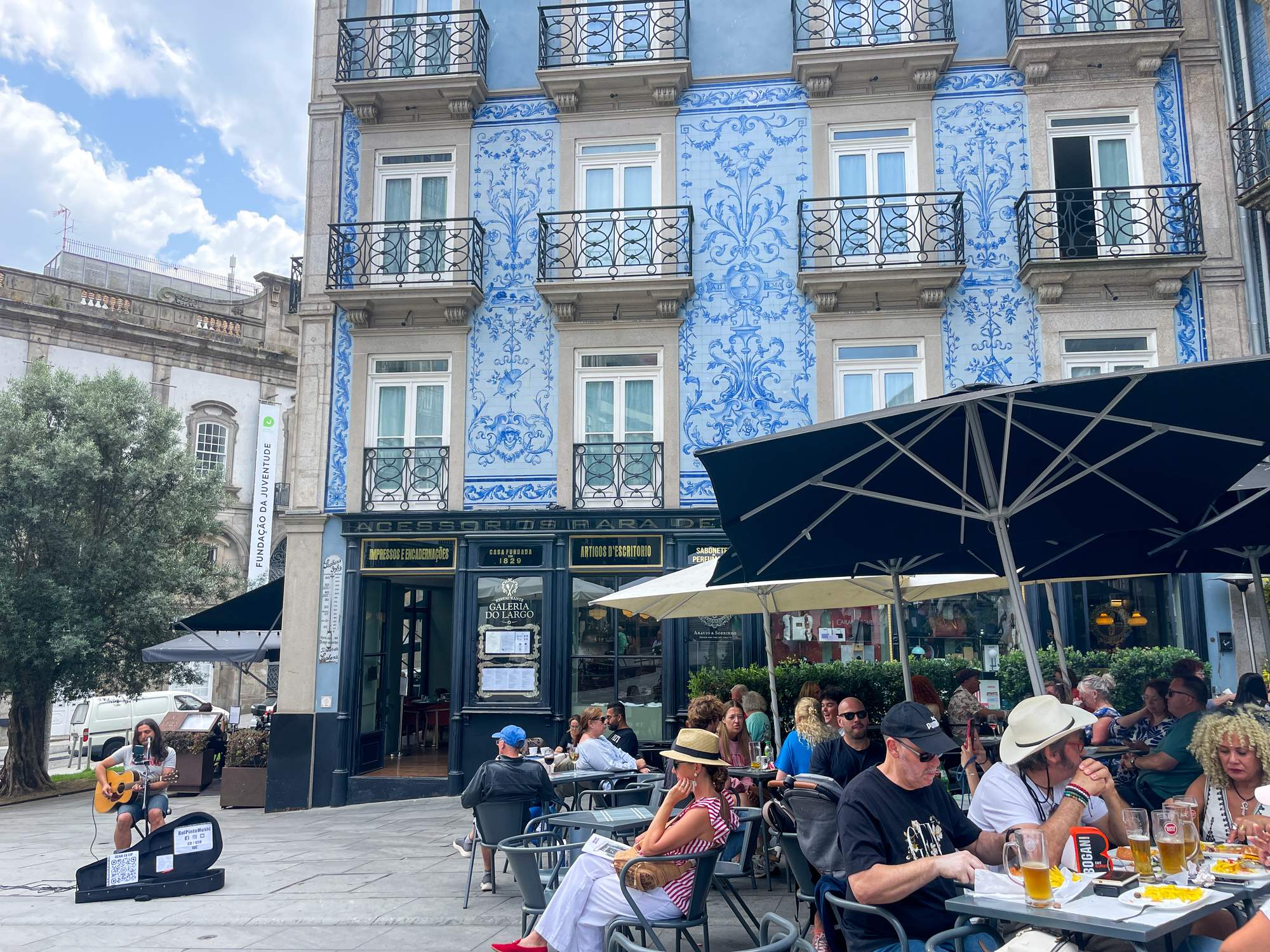
When the weather is fine, there is no better place to be than outside for a meal or drinks on one of the city’s inviting pavements. Named for the ancient eléctricos that still rattle past, Tram Restaurant drapes its tables along Rua Nova da Alfândega just meters from the water. There is often a musician serenading outdoor diners, and I just love the vibes there. It doesn’t get any closer to the water (or the city’s iconic bridge) than Bar Ponte Pensil, which makes great use of the space and usually has a live band.

If you’re looking for a great sunset spot, Musa das Virtudes is close to the beloved Taberna Santo António, and serves craft beers and a legendary smash burger. Outdoor seating is always in high demand at Bar Aduela (Rua das Oliveiras 36). This is a great spot to people-watch and mingle with cool Portuenses. When indecision strikes, duck into the Time Out Market Porto food hall by São Bento Train Station, where Porto’s rising-star chefs each man a stall. You’ll find indoor and outdoor seating there.
4. Crossing Ponte de Dom Luís I
Porto’s most photographed iron giant is far more than a pretty backdrop for postcards. Completed in 1886 by Belgian engineer Théophile Seyrig, a protégé and former partner of Gustave Eiffel, the double-deck Ponte de Dom Luís I bridge replaced a precarious pontoon of old port boats and forever rewrote the city’s skyline. Its 395-metre sweep of latticed steel was the widest arch on earth at the time, linking Porto’s medieval Ribeira quarter to wine-soaked Vila Nova de Gaia (more on this later).
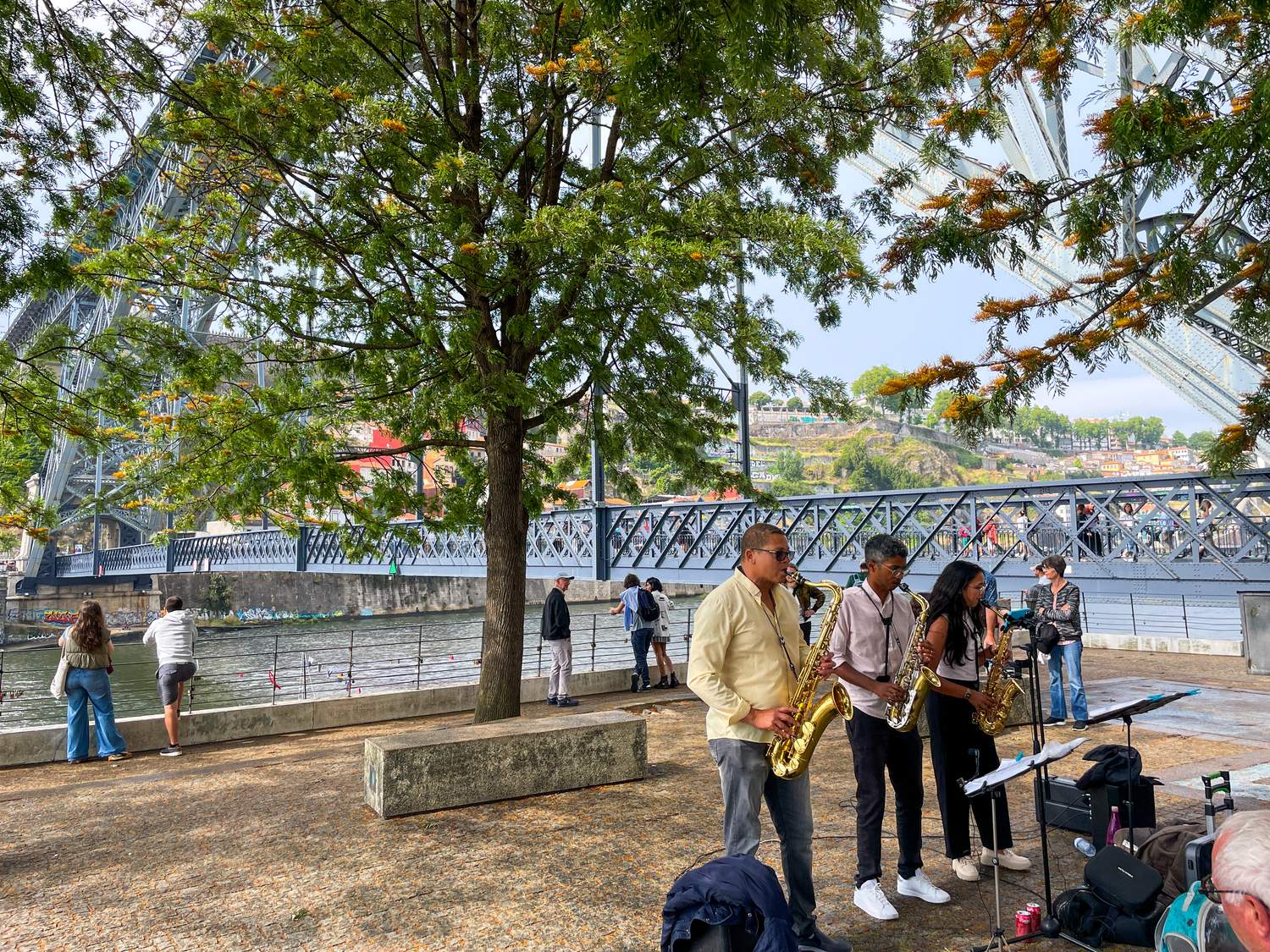
On the upper deck of the bridge, the metro hums past every few minutes. Down on the lower deck, there is a narrow pedestrian path, and cars inch across at river level while daredevil teens cannonball from the guard rails, egged on by spectators. Walking the Ponte de Dom Luís I is one of the top things to do in Porto. Check out the upper and lower decks at different times of the day for different perspectives.
5. Spending an afternoon in Vila Nova de Gaia (and lingering till sunset)
From the moment you cross the Ponte de Dom Luís I, you’re no longer in Porto. You’re in Vila Nova de Gaia, the quieter, equally charismatic sister city spread along the southern bank of the river. You simply walk across the bridge (upper or lower deck, take your pick) and you’re in Gaia within minutes. Hugging the Douro directly opposite Ribeira, Gaia was once little more than a warehouse district for Portugal’s prized fortified wine.
So why cross the river to Vila Nova de Gaia? It is home to the famed port wine lodges, where the fortified nectar has been aged and adored for centuries. You’ll also find welcoming restaurants, rooftops, a cable car, and places to sample ginja (a Portuguese liqueur made by infusing ginja berries). Sign up for a guided port cellar tour (most run 30–60 mins) to hear tales of Rabelo boats, Douro terraces, and barrel-aged alchemy before sampling ruby, tawny, and vintage port pours. Check out Niepoort Cellars, Sandeman, Taylor’s, or Caves Burmester. As golden hour approaches in Vila Nova de Gaia, locals migrate uphill to Jardim do Morro with bottles, guitars, and contagious good cheer. Spend at least one of your sunsets there.
6. Tripe on Thursdays
Ask a local where to be at noon on a Thursday and they’ll point you toward a bubbling cauldron of tripas à moda do Porto, the city’s emblematic stew of velvety tripe, white beans, carrots, smoky chouriço, tomatoes, and dashes of paprika.
Eating tripa (animal stomach lining) is as Porto as climbing the Dom Luís I Bridge, and in fact, locals are called tripeiros (tripe eaters). There is even an organization call Gastronomic Brotherhood of Porto-Style Tripe. Legend says that in 1415, when Prince Henry the Navigator needed provisions for his fleet bound for Ceuta, the good folk of Porto handed over every prime cut, keeping only the stomach lining for themselves.
Some restaurants only prepare this slow-cooked tripe delicacy on Thursdays and at lunchtime, one of them is O Afonso. Go early to avoid queuing (they are only open for lunch until 3 pm) and leave any squeamishness at the door. This is a no-frills restaurant on Rua da Torrinha. You can also tuck into the traditional tripe at Taberna Santo António, O Buraco, Lider, and A Cozinha do Martinho, where Anthony Bourdain had his.
7. Eating grilled sardines loudly and proudly (especially in June)
Porto has many edible love letters, but none are written in such smoky, silvery shorthand as the humble sardine. Even if you swear allegiance to fancier fish, you owe it to your taste buds (and to Porto’s soul) to tuck in. Festa de São João (23–24 June) is one night when the city smells of sardines and fireworks. This centuries-old tribute to St John the Baptist, Porto’s patron saint, is like midsummer meets Mardi Gras with streets strung with bunting and grills on every curb. You’ll watch fireworks over the Douro shoulder-to-shoulder with thousands of merrymakers who have sardine grease on their fingers and pure delight in their eyes.
MUSIC TO LISTEN TO IN PORTO
Get into the travel spirit with this curated playlist of songs.